Welcome to Undergrad in the Lab!

Undergraduate research can be incredibly rewarding, but where do you start and how do you succeed? Navigating this unfamiliar territory is not easy. Here you will find advice on how to find a research position, and how to get the most out of your experience.

Research is to see what everybody else has seen, and to think what nobody else has thought.

— Albert Szent-Györgi (1893-1986) U. S. biochemist.
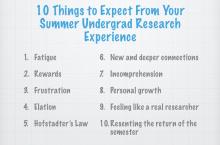
 A list of 10 things that are split between two columns. The first column lists 1. Fatigue. 2. Rewards. 3. Frustration. 4. Elation. 5. Hofstadter's Law. The 2nd column lists 6. New and deeper connections. 7. Incomprehension. 8. Personal growth. 9. Feeling like a real researcher. 10. Resenting the return of the semester.

— from the Lab Manager's bench

For some undergrads, this summer will be spent lounging on the beach reading and hanging out with friends. Days will be spent blissfully sleeping until a parent annoyingly insists that it’s time to get up and do something.

But alas that’s not for you.

12
Apr

The One Letter to Rule Them All

THE ONE LETTER TO RULE THEM ALL  how to help your research mentor write the strongest recommendation letter. Ask early. Update your CV. Write a self-assessment statement. Send everything in a single email. Stick around. Remember the thank you.

— from the PI’s desk

Why this letter matters so much

As an undergrad, one of the reasons you devoted so much time to a research experience was to earn an epic letter of recommendation--one that speaks to your strengths, resilience, character, self-reliance, cultural competencies, ability to solve problems, and contribute to a group effort.

This letter will be a comprehensive endorsement of your graduate, medical, preprofessional school application, or for a job complete with specific examples that influenced your PI's opinion. This one letter has the potential to outweigh all other letters from a professor whose class you attended, or from someone who oversaw a volunteer program you participated in for a semester.

a photo of a sandy beach

—from the Lab Manager's bench

Should I stay, or should I go?

For most researchers, working in the lab over a holiday break is somewhat different from working in the lab during the rest of the year. For example, if an experiment has flexibly, it can be started or stopped when it's convenient for the researcher instead of planned around seminars, classes, and campus parking issues.

In addition, some researchers take a vacation, adopt unconventional work hours, or hide in their office to work on a manuscript and only visit the lab to search for inspiration, a snack, or a temporary distraction.

10
Feb

Is an Independent Project Required for Co-authorship?

photo of hands wearing blue gloves pouring a solution into a tube

—from the Lab Manager's bench and the PI's desk

The inquires we receive about earning a co-authorship from undergrads in the lab typically consist of a summary of their project and a request to evaluate if it's "independent enough."

In many cases, the undergraduate is wondering if they have produced enough independent work to write a thesis (most have by our account), but others wish to know if they will be included as co-author on a journal article or elsewhere.

10
Jan

New Years Resolutions and Summer Research Applications

A photo of microscope lenses and a side on the microscope stage

—from the PI's desk
As an undergraduate student, the new year might include making self-improvement goals such as getting better organized, more sleep (and less Netflix), and attending office hours to make meaningful connections with professors.

But if you also include exploring your summer research options before the semester is in full swing, you won’t lose out on an incredible opportunity simply because you miss an application deadline.

computer with glasses and a coffee

—from the Lab Manager's bench

I originally wrote this post to answer the question, "What tips do you have for a student with 6 months left for PhD thesis submission?" However, this version is slightly different from the one I posted on Quora. Many of the tips were also adapted from my Instagram account

Whether you love or hate them writing and editing in some form are probably part of the science communication responsibilities that accompany your research position. When writing journal articles on a collaborative research project, you might be responsible for creating the majority of a manuscript (with co-authors and your PI weighing in) or your PI might write the bulk of it but require your input. But if you're writing a student thesis (undergrad or graduate) the bulk of the writing will come from you.

Pages