Welcome to Undergrad in the Lab!

Undergraduate research can be incredibly rewarding, but where do you start and how do you succeed? Navigating this unfamiliar territory is not easy. Here you will find advice on how to find a research position, and how to get the most out of your experience.

Research is to see what everybody else has seen, and to think what nobody else has thought.

— Albert Szent-Györgi (1893-1986) U. S. biochemist.

Life and Research: A Survival Guide for Early-Career Biomedical Scientists

—from the Lab Manager's bench and the PI's desk

Life and Research is for grad students, postdocs, and staff scientists. However, advanced undergrad researchers, or students planning to do a postbac, planning to go to grad school, or planning to do research in med school will also benefit from applying the strategies in Life and Research. We also recommend Life and Research for principal investigators who mentor early-career researchers.

Why we wrote Life and Research as a researcher-centered book

It's generally presumed that most early-career researchers have the skill sets they need to succeed in their current position simply because they were successful enough to make it to that level. On the surface, this makes sense.

But in reality even two scientists working in the same lab at the same time won’t automatically receive equitable training, professional development opportunities, and mentorship or acquire the same transferable skill sets. As an early-career researcher, you can become a data-producing machine without developing essential communication or interpersonal skills, or you can spend days and nights overworking yourself in the lab making little progress because your approach to benchwork or time management is haphazard.

Regardless of the work culture you experience and the support you receive from labmates, we wrote Life and Research to empower grad students, postdocs, and staff scientists to identify and develop transferable skills and ward off common problems with labmates and the principal investigator by keeping the lines of communication open and building a network of mentors and advisors who are invested in your success. We also hope to persuade you to continually evaluate your nonwork goals holistically, so your life, wellbeing, and relationship goals don’t fall by the wayside.

Many strategies we suggest are inspired by failure or regret—some are ours and others are from colleagues who shared their experiences with us. Ultimately, we’ve created a guide on what we wish we had known when we were early-career researchers and strategies that we wish we had implemented far sooner in our careers.

How Life and Research is organized

Life and Research is divided into two parts. Part 1 contains strategies on achieving personal goals connected to an early-career researcher’s professional responsibilities, while Part 2 is focused on strategies directly related to accomplishing research objectives or conducting labwork.

Table of Contents (A partial list)

04
Oct

Mentoring Matters with Dr. Jennifer Robison

photo of Dr Robison and family displaying school spirit (Manchester University Spartans) at home

Dr. Jennifer Robison Assistant Professor of biology at Manchester University located in North Manchester, Indiana. Her research program focuses on understanding the molecular and physiological events that occur during abiotic stress in plants. Connect with her on Twitter @JenRobiSci .

Q1:If you had a mentor(s) as an undergrad who you credit for the career path you're on now, please share a little bit about who they were and what they did that made such an impact.

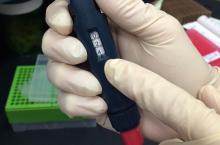
person holding a pipettor, wearing gloves, pointing to the numeric window on the pipettor

—from the Lab Manager's bench

The mysterious ways of mentors

Most mentors do a solid job informing a new undergrad of the basic requirements of a research position. Typically, they cover the expected time commitment, lab safety procedures, lab dress code, and guidelines for writing a pre-proposal or end-of-semester report. When it comes to working at the bench, most mentors remember to share technical tricks with a new researcher, and offer guidance on getting organized, programing equipment, and finding research supplies.

But sometimes, because we have been in science for a long time or because we are distracted by our own research goals, we forget what it was like to be a new undergrad adjusting to a professional lab environment.

a person wearing purple latex gloves holding a pipette and the words ready, set, pipette

—from the Lab Manager's bench

I originally wrote this post on Quora to answer the question, "How do I get involved in undergraduate research while still in community college and working on my general education?" This version is slightly different from the one I posted on Quora.

You might feel that your options are limited but you probably have more than you think.

15
Jul

Keep in Touch with Your Mentors. You Matter and We Care.

—from the Lab Manager's bench

As a mentor, I don’t stop caring about a former student’s success, well-being, or happiness because they are no longer part of my research group.

I want to know about the life events that they want to share with me—professional and personal--and celebrate when they achieve milestones in either category.

15
Jun

5 Survival Tips for Summer Research

—from the Lab Manager's bench

After publishing the blog post “10 Things to Expect” I received requests for some summer research “survival tips.” I’m happy to provide the same tips I give my new undergrads at the start of a summer experience.

Pages